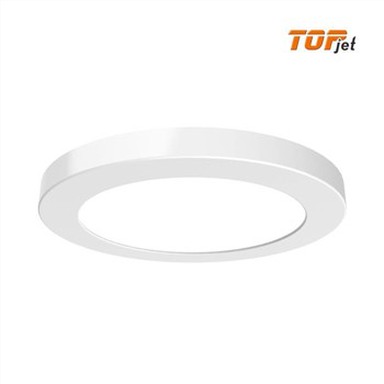
From That, Should We Consider The Heat Dissipation Of LED Panel Lights?
Jul 10, 2021
From that, should we consider the heat dissipation of LED panel lights?
With the continuous development of technology, some technical problems have not been solved so comprehensively. Heat dissipation is a topic that everyone pays attention to.
The volume of the panel light is very small, and it is not enough to dissipate heat from one place alone. It must have auxiliary heat dissipation. Nowadays, many lamps and lanterns need to use auxiliary design to solve the heat dissipation problem, but the heat dissipation problem is not fully solved. The technology continues to improve. The heat dissipation problem of panel lights has always been a problem of great concern to LED manufacturers, and heat dissipation directly affects the LED. The service life of lighting fixtures.
The heat dissipation problem of indoor lighting LED panel lights. In panel lights, 30%-35% of the electrical energy of the chip is converted into light energy during normal operation, and the other 65%-70% is converted into heat energy. The panel lights are very sensitive to temperature. .
Generally speaking, LEDs are fortunate to avoid performance degradation or failure when the junction temperature is below 125°C. 70% of LED failures are caused by excessive temperature, and when the load is at half the rated power, the failure rate will be reduced for every 20°C rise in temperature. Doubled.
Consider the method of solving the heat dissipation of LED panel lights from the following three aspects:
1. The heat dissipation of LED panel lights should also consider eliminating factors that hinder heat transfer in the heat transfer path, such as expanding the cross-sectional area of the path (for example, thick copper wires are more likely to conduct heat than thin copper wires), and applying thermal lubricant to make the product The connection part does not leave a gap.
2. Improve the heat release characteristics of the radiator surface, such as installing more heat sinks on the surface to expand the heat release area of the radiator, etc.
3. Because the LED panel light is relatively thin, fans or natural convection heat dissipation methods cannot be used to dissipate heat, so it can only be considered from the structure and materials.
The aluminum frame used in the panel light is the main channel for heat dissipation, because the heat conduction speed of aluminum is relatively fast, which is conducive to heat dissipation.